

June 10, 2026
The end is only the beginning: the demise of the Segway PT opens the door for HumanOnaStick’s new era of micro mobility.
In 2001, the Segway Personal Transporter (PT) was unveiled to the public. It stood there on its two wheels and promised a new future for personal-mobility, one that would reinvent how the average person moved through the world. Born with the idea that it would find its use as a consumer product, early claims suggested that this machine would prove to be an asset for every household. However, when reality cast its grim shadow on the Segway PT, it fell short in almost every way.
Within the marketplace this machine was an utter failure. Its means did not justify the cost, urban areas were not prepared to support such vehicles, and the company had failed to portray a value proposition worthy of public appeal. Although all kinds of warning signs were flashing, the inventors of the Segway PT remained stubborn in their decisions. They refused to listen to their market and failed to see that this product would never break through as a consumer good. Five years into their production, the company had sold less than 1% of its projections.
A key factor which the inventors of the Segway PT continued to overlook was the understanding that the Segway itself required more than a rider. It needed a complete operating system which could include training, safety gear, route guidance, and a reason to exist beyond the justification of fun transportation.
That is where we saw an opportunity.
Our Story
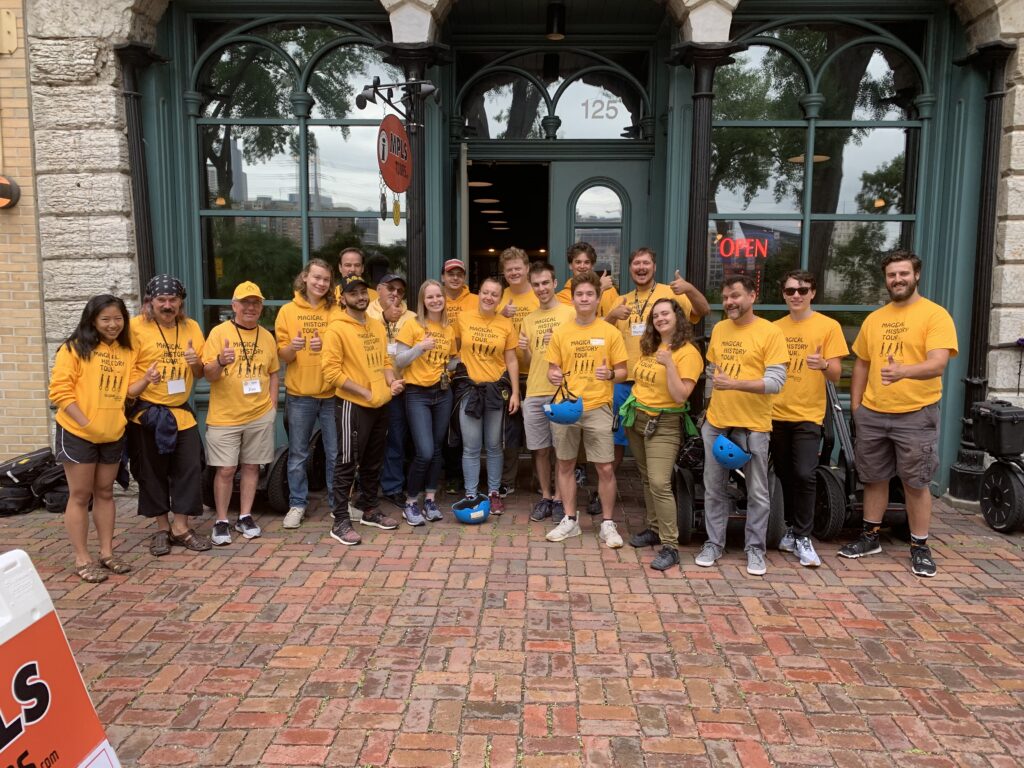
The Minnesota State Fair is a place unlike any other, where almost anything you can imagine is fried and served up on a stick. When we had the chance to introduce our company at the State Fair in 2003, it felt only natural to take inspiration from this Minnesota treasure. Thus, HumanOnaStick was born. As the world’s first Segway tour company, we introduced a new way to explore the city. Ever since, Segway tours have been part of Twin Cities culture.
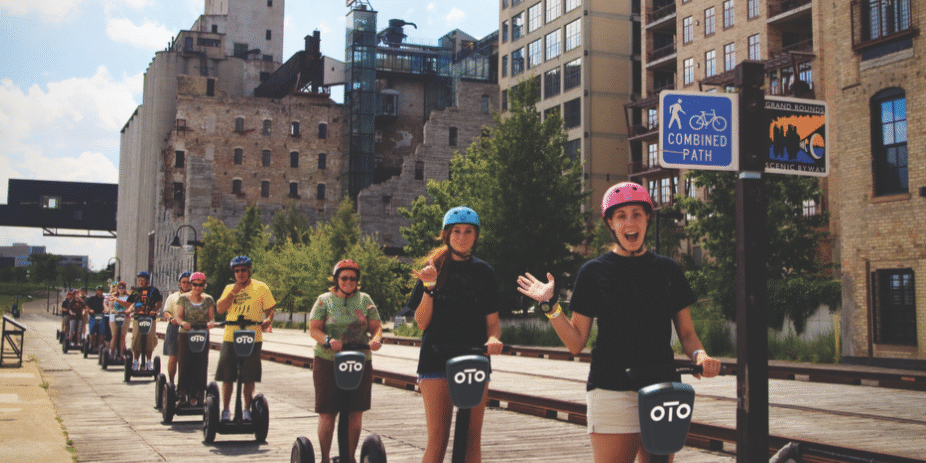
Stepping onto a Segway is a kind of magic. It brings back that feeling from childhood, when you first learned to walk or ride a bike and suddenly the world opened up in a new way. As you stand with two wheels under your feet, begin to find your balance, and realize you are in control of your own movement, everything around you shifts. Shared sidewalks become manageable, the bridge beneath your feet feels tangible, and the history embedded in the structures around you begins to speak.
You do not simply pass through the city; you enter and become a part of it.
That experience became our foundation. We did not begin with a fascination for robotics, but with a deeper question: how can we use innovation to enrich the human experience? It is a question that has guided every decision since, including how we power what we build.
In 2005, just two years after we were founded, we committed to running our entire Segway fleet on certified renewable energy. Sustainability was never simply a feature we added; it was, and remains, a value at the heart of our work. Now as we engineer our new AI models, we continue to power them solely through green energy. The AI industry’s current energy crisis makes plain what is at stake, and our commitment to GreenEV™ matters more than ever. We want to protect the abundant ecosystems around us, so that they continue to thrive alongside the technologies we create.
A Glimpse into Our Future
Over the past twenty-three years, our roots have remained firmly planted in that mission, even as we’ve grown. Now, we believe it is time to help shape a better future for mobility systems.
That is why we created oTo.
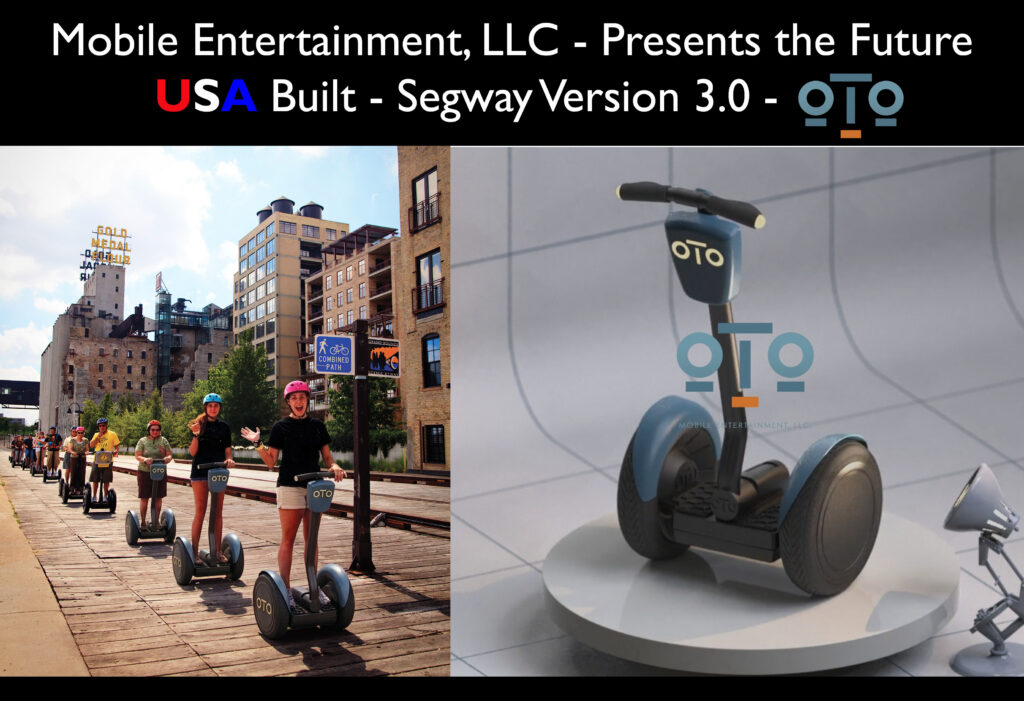
Pronounced “auto,” oTo is our next-generation vision for a purpose-built, tour-specific human transporter. Unlike the Segway PT, a general-purpose machine, oTo is designed specifically for one thing: professionally guided, memorable experiences. Its machine, software, sensors, customer training, guide tools, group navigation, and business model are all developed around that single purpose.
oTo introduces a new generation of features built specifically for guided tours and is completely powered by renewable energy. This July, we’ll reveal more of what oTo can really do, however, what we can say now is this: oTo doesn’t just revolutionize its predecessor, it rewrites its narrative. oTo will reduce the carbon footprint of urban tourism from day one and reshape what it means to experience the city from atop a next-generation self-balancing human transporter.
Conclusion
Finding humanity in a world that feels increasingly manufactured is a daunting task. Too often, the drive for innovation becomes clouded by a disregard for the past and a misunderstanding of what the future should be. In recent years, we have had a front-row seat as hate, power, and indifference have worn away at the world around us and bulldozed over human instinct. It has become ever more important to find ways of innovation that continue to support humanity rather than increasingly tear it apart.
Through our tours, we work to keep our shared past alive and the ongoing present at the top of our minds. History is a continuous phenomenon, and by sharing the truth of where we’ve been and examining what continues to unfold, we explore what has shaped the diverse, complex culture of the Twin Cities. Furthering the implementation of eco-tourism with oTo, we intend to blend safe and respectful technological innovation with culture and humanity.
