
August 21, 2026
The End of The Work-From-Home Era
When was the last time you went a day without looking at a screen? I’m not sure that I could pinpoint a single day in my life. My generation was born into a mediated world curated and designed by those who came before. Screens are all we know. Evolving alongside technology has allowed us to witness media and tech transform our society into one that is overly productive, ambitious, capable, polarized, and isolated. These traits coexist in ways that continue to breed innovation yet also drive us into a perpetual state of exhaustion.
Our never-ending intake of media is the double-edged sword that leaves us with an utter sense of euphoria as it sinks into our skin—everything one could dream of is theirs with the click of a button—yet, as the blade twists and carves us out, we’re left with a severance so deep one can only wonder what connection truly means in a world determined by getting the fastest 5G. One of the clearest places this tension has surfaced is in the workplace, where technology has changed not only how we communicate, but also where and how we work.
Now, this friction is once again reshaping work life as employers ask workers to get offline and return to the office. This ongoing debate between remote and in-office work is not only about productivity and policy, but it also begs the question about whether physical presence can restore the human connection technologies helped us maintain but could never fully replace.
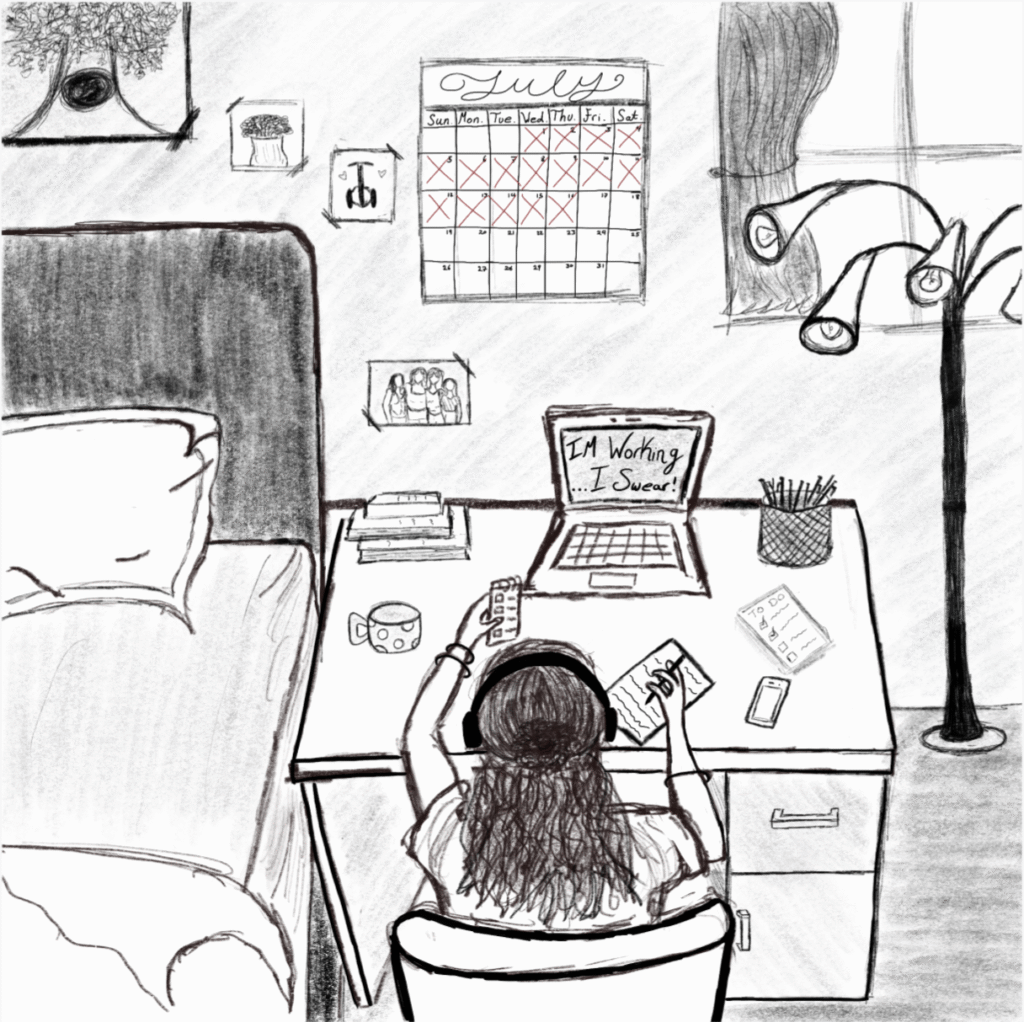
Throughout the COVID-19 pandemic, we witnessed a surge of work-from home policies as companies rushed to adopt work models that offered the flexibility that moment demanded. Hybrid models had existed in many workplaces years before; however, those predecessors were far stricter. Now in 2026, companies have found themselves caught in the middle of a conflicting structure between flexibility and productivity.
Remote work seemed to be a promising future for the workplace. It allowed employees to adapt situationally, work from all corners of the world, and solidify a work-life balance which worked best for them. This fall, as autumn’s cool breeze swirls around the city, the prolonged chapter of relaxed work-from-home policies is blowing closed, and a new chapter is beginning.
This September, along with the typical back-to-school energy floating through the air, we will be met with an anxiously awaited—and for some anxiously dreaded—back-to-work season. As many companies pull back on their remote options, corporate America will be retreating to a version of its pre-pandemic self.
The Twin Cities Follow Suit
The Twin Cities are following this pattern of shifting policies and have been doing so gradually since early 2025. Local employers have begun tightening their policies and are moving away from their flexible hybrid schedules. In their place, companies and government agencies across Minneapolis and St. Paul have introduced clearer expectations about how often employees are expected to be in the office. Since June 1, 2025, Governor Tim Walz has implemented a return-to-work policy in which government employees are expected to work in person a minimum of 50% of their allocated time. Walz states that “having more state employees in the office means that collaboration can happen more quickly and state agencies can build strong organizational cultures…” Similar arguments are now being made for corporate return-to-office policies.
Target, 3M, and General Mills have all implemented similar guidelines for their corporate workers, which are set to take effect in early September. Target will begin to require all employees to return in-person to the office three days a week, while 3M and General Mills will follow a four day in-office model. These are just a few of Twin Cities local companies which will be returning to the office, however the list spans to include many large corporations such as UnitedHealth Group, Ameriprise, U.S. Bank, and Best Buy.
So why are these companies wanting employees to connect offline?
3M suggests that ending its pandemic-era flexibility will allow employees to engage, collaborate, and innovate in ways they are unable to do when working remotely. On the other hand, General Mills and Target attribute their decline in business performance and missed expectations to their relaxed remote polices. These explanations point to a striking paradox: in a world that has never been more connected, humanity has never felt so disconnected. The very technologies which made remote work possible are now being blamed for the disconnection and lost collaboration these companies are trying to repair. Tools that once kept us productive from anywhere in the world are now being cast as the reason we feel so far apart.
Defenses of remote work tend to center on work-life balance, cost savings, and autonomy. Arguments against it center on productivity, engagement, isolation, and company culture. Increasingly, that debate is really a question of what technology can and cannot replace. Collaborating, learning, and having a shared experience together with co-workers allows bonds to be built and a sense of connection to be made. We aim to harness the collaborative nature of human connection while on our tours, so that by the end of their adventure a group feels ready to tackle whatever challenge may surface within the office.
Again, I’d like to pose the question: when is the last time you went a day without looking at a screen? What I am really curious about is when the last time was that you felt connected to the world around you through the lens of your own eyes rather than that of a camera. Computers, screens, and phones, make work do-able. I wouldn’t be able to post this blog without one, yet there is only so much one can experience through a screen. Work-life balance, cost savings, and autonomy are all important factors within the workplace. It is plausible to want to save money on an office space or want more control over what your day-to-day looks like. However, technology cannot replace the experience of one-on-one human connection that comes with in-office work. Even as AI advances and the real meaning of “work” begins to change, screens create a barrier between the real and the computerized version of reality.
Securing one’s autonomy is a daunting task. No one wants to, or should, sacrifice themselves for a job. Remote life allows for one to secure their personal autonomy in the way that they could act, do, or be however they want, whenever they want. Yet, this ideal version of autonomy remains fabricated through the lens of media. The computer dictates all of one’s communication, completion of tasks, schedules, and day-to-day life—establishing a greater sense of control than a boss could ever possess. Whether in or out of the workplace, within recent years it seems as though our minds, thoughts, and ideas seem to thrive only when displayed and poured out into the digital.
While we are a company that thrives on technological innovation and harnessing every new tool we can get our hands on, we have not lost sight of what matters most: people. HumanOnaStick is about showing people a new way to experience the world around them, whether they are with friends, family, co-workers, or even strangers. That feeling you get when you look around at a street that was once just a street and realize its history is now part of your story is unparalleled. Shared experiences connect us to our humanity and remind us of what truly matters. As employees head back into the workplace, we should take this moment to lean into that kind of exploration and build an environment rooted in shared experiences.
Employers are now realizing that this sense of community is far more important than offering endless flexibility. For companies, this connection means disconnecting from their established remote policies. We are people of culture, with individuality, creativity, and a need for collaboration. Prolonged days of Zoom calls and Teams meetings have proven a specific inability to foster lasting relationships in the workplace, and now is the time companies are choosing to say goodbye to remote life.
However, with this push comes much restraint from employees, and now employers are left wondering whether these policies will truly boost collaboration and morale, or if they will create a new tension in the workplace.
A Better Way To Bring Teams Back Together
Giving employees a few months to adjust their routines and prepare for more in-person work may help, but this shift will still require intention. While leaning on in-person connection and the harnessing of humanity can strengthen company culture, asking employees to give up the flexibility they have grown accustomed to is no small task.
This is why rebuilding workplace connection cannot rely on the same old icebreakers and forced team building exercises many employees have come to dread. Creating a culture of collaboration, care, and inclusivity should feel engaging—not obligatory. As teams return to the office, companies have an opportunity to rethink what connection looks like outside of the conference room. Sometimes, the best way to bring people back together is to get them out on an excursion away from their desks. Remind them that coming back in person can still leave room for exploration, connection, and the world beyond the office.
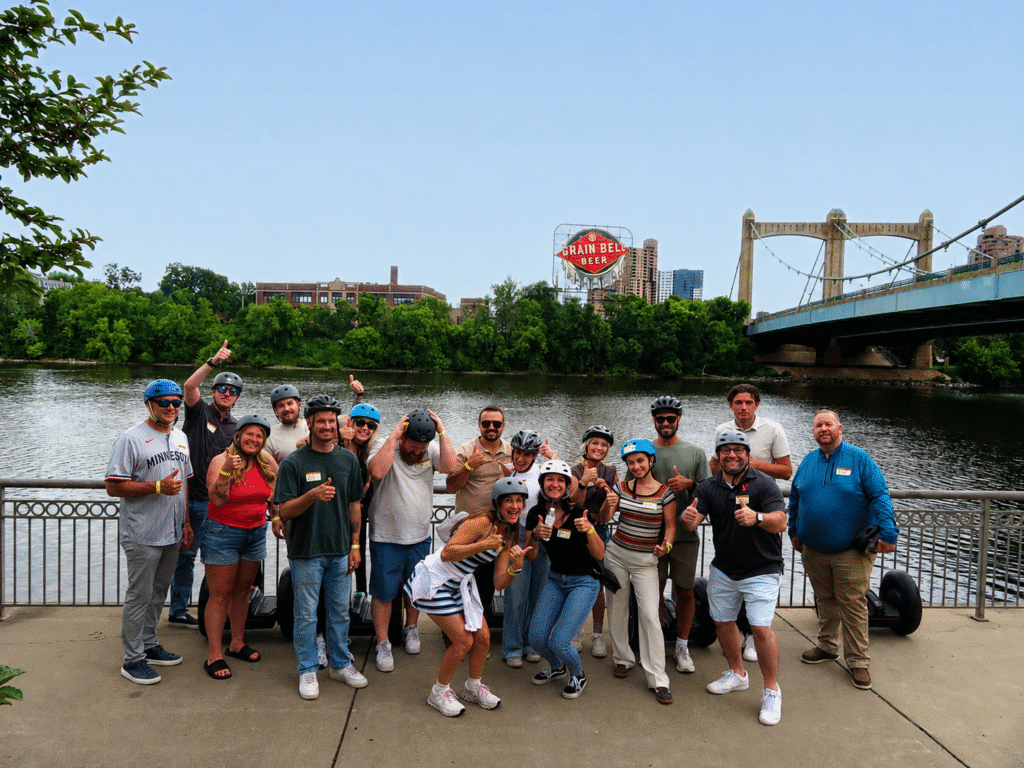
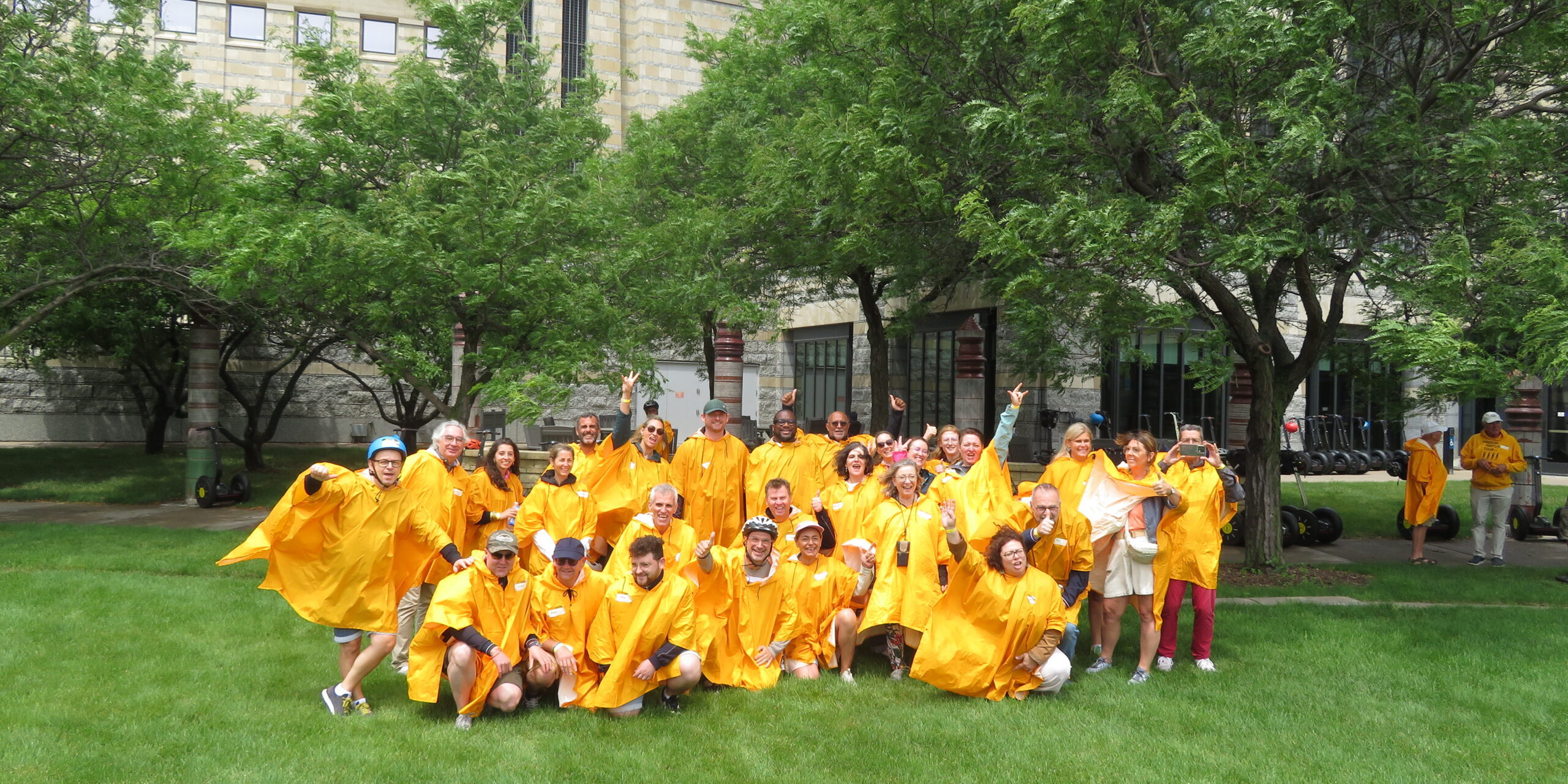
These are just a few of the amazing teams we have taken on a Segway adventure over the years.
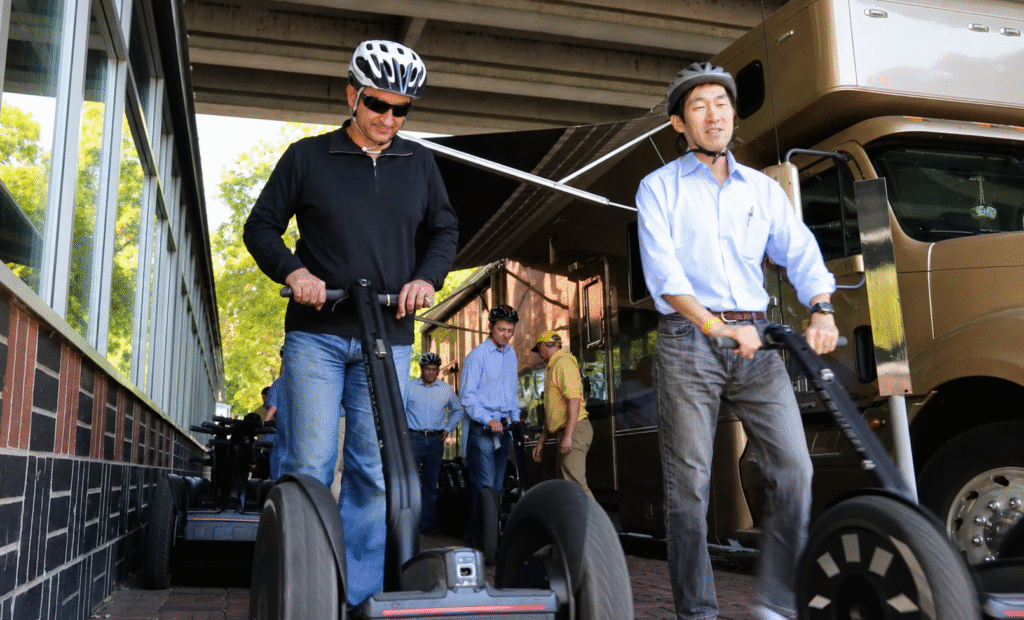
For Twin Cities companies looking to reconnect their teams in a fun, low-pressure way, a guided Segway tour offers a memorable alternative. It brings employees outside and gives them a chance to see the beauty of the city they are returning to. As they ride through Minneapolis and St. Paul, team members may discover a new favorite lunch spot, a place to walk during breaks, or simply a renewed appreciation for the city around them.
Because a Segway tour is guided, approachable, and fun, it creates space for employees to connect naturally. Team members are not forced into conversations or participation in awkward activities; connection happens through the shared experience of learning to ride, exploring the city, and discovering new places together. At the end of the day, your employees will return to the office feeling refreshed, reconnected, and ready for what comes next.
So come September, remember that returning to the office is not just about where employees work—it is about how they feel when they get there. Give your team a reason to reconnect, rediscover the Twin Cities, and feel excited about being together again. Start with something simple, memorable, and outside the usual routine: a guided Segway tour built for connection.